The Hong Kong BSAP 2035 highlights four strategic areas—Nature Conservation, Deepening Mainstreaming, Capacity Building, and Collaborative Partnering—supported by 30 Priority Actions. Each Priority Action relates to relevant Priority Actions of the China National Biodiversity Strategy and Action Plan (2023-2030) (China NBSAP), targets of the Kunming-Montreal Global Biodiversity Framework (GBF), and the UN Sustainable Development Goals (SDGs). We will be sharing the latest updates and ongoing development of the BSAP regularly on this website.

Strategic Area 1
Nature ConservationEnsuring the preservation of healthy ecosystems

Strategic Area 2
Deepening MainstreamingBuilding a city that thrives in harmony with nature

Strategic Area 3
Capacity BuildingEmpowering everyone to actively contribute

Strategic Area 4
Collaborative PartneringExtending the benefits of nature to a broader community

BSAP 2035 Strategic Area
Priority Action 1.1Establish new protected areas and explore application of OECMs
Area-based conservation measures are fundamental and effective in safeguarding biodiversity in the long term. Protecting intact habitats and implementing appropriate conservation measures keep our ecosystems healthy and resilient, ensuring the continued delivery of ecosystem services that support our city. Building on its robust network of protected areas, Hong Kong will seek to apply OECMs and explore additional area-based approaches. These efforts will contribute to the national effort of achieving the KMGBF Target 3—to conserve 30% of land and seas globally by 2030.
BSAP 2035 Overall Targets
China NBSAP Priority Actions
KMGBF Targets
SDGs
BSAP 2035 Strategic Area
Priority Action 1.2Enhance management of protected areas and habitat connectivity
While continuing to maintain and protect all the existing protected areas, the Government will review and enhance the management of protected areas for the conservation of biodiversity. Specifically, conservation management plans will be developed. The connectivity of habitats is important, as it not only facilitates wildlife movement, but also helps the local flora and fauna respond to the challenges of climate change. The Government will continue to maintain the protected area network and take opportunities to enhance the connectivity of our natural habitats.
BSAP 2035 Overall Targets

China NBSAP Priority Actions
KMGBF Targets
SDGs
BSAP 2035 Strategic Area
Priority Action 1.3Establish wetland conservation systems
Wetlands in Hong Kong are vital ecological assets, supporting a vast array of biodiversity and delivering essential ecosystem services to our city—from flood regulation and water purification to climate change mitigation. The Mai Po Inner Deep Bay Ramsar Site, for instance, is recognised as an internationally important wetland, providing critical feeding and resting grounds for migratory birds along the EAAF. Establishing a comprehensive Wetland Conservation System would not only safeguard these ecosystems but also advance climate resilience across the broader landscape.
BSAP 2035 Overall Targets
China NBSAP Priority Actions
KMGBF Targets
SDGs
BSAP 2035 Strategic Area
Priority Action 1.4Enhance existing ecosystems and restore degraded habitats or declined biological resources
Actively restoring degraded ecosystems enables the recovery of the functions and services they provide. Nature is always dynamic; many are shaped and evolved naturally by climate and ecological succession, and some are influenced by human activities. When ecosystems degrade, they lose resilience, support less biodiversity, and deliver fewer benefits to society. The first phase of the BSAP has laid the groundwork by identifying challenges and initiating studies on local ecosystems. Building on this foundation, we aim to advance proactive, more timely interventions that restore degraded ecosystems.
BSAP 2035 Overall Targets
China NBSAP Priority Actions
KMGBF Targets
SDGs
BSAP 2035 Strategic Area
Priority Action 1.5Revitalise remote countryside and conserve ecologically important sites under private ownership
Some of Hong Kong’s most biodiverse and ecologically sensitive areas are located on private land and in the remote countryside, where they can remain vulnerable to human activities and unauthorised development. Conservation and revitalisation initiatives—such as MA scheme projects supported by the Countryside Conservation Funding Scheme (CCFS) and Lantau Conservation Fund (LCF)—have yielded significant results over the years. Looking ahead, we will continue working with landowners and local communities to revitalise our countryside and breathe new life into the countryside. These efforts will conserve our nature, strengthen community ties, and safeguard cultural heritage, fostering a harmony between people and the environment.
BSAP 2035 Overall Targets
China NBSAP Priority Actions
KMGBF Targets

SDGs
BSAP 2035 Strategic Area
Priority Action 1.6Enhance actions in combating illegal harvesting and poaching, and protecting endangered wildlife
Combating wildlife crime is critically important to protecting biodiversity, preventing the extinction of endangered species, and upholding international conservation commitments, while deterring criminal networks from profiting from illegal trade. Under the first phase of the BSAP, Hong Kong implemented a full ban on the local ivory trade. The city also strengthened the Protection of Endangered Species of Animals and Plants Ordinance (Cap. 586) by raising maximum penalties to deter smuggling and the illegal trade of endangered species. We will remain highly vigilant and strengthen enforcement against illegal poaching, collection, sale, and trafficking of local species. The Government will also actively support strong proposals that enhance enforcement, foster innovation, and build collaboration with stakeholders in the fight against wildlife crime.
BSAP 2035 Overall Targets
China NBSAP Priority Actions
KMGBF Targets
SDGs
BSAP 2035 Strategic Area
Priority Action 1.7Strengthen species protection, recovery and control measures
Species action and management plans provide practical support for species conservation and recovery, while also addressing the growing challenges of human–wildlife conflict. In the first phase of the BSAP, several Species Action Plans (SAPs) were developed to enhance conservation of threatened species. Building on this progress, we will further strengthen conservation and management measures for native plants and animals in collaboration with our partners, and implement Management Action Plans (MAPs) for targeted wildlife in the next phase.
BSAP 2035 Overall Targets
China NBSAP Priority Actions
KMGBF Targets

SDGs
BSAP 2035 Strategic Area
Priority Action 1.8Improve management of invasive alien species (IAS) and control of environmental release of Genetically Modified Organisms (GMOs)
Improving the management of IAS and controlling the environmental release of GMOs are critical steps in safeguarding native wildlife. As a major trade and transport hub, Hong Kong faces heightened risks of non‑native species invasion and GMOs introduction. During the first phase of the BSAP, Hong Kong established a risk assessment protocol to prioritise IAS management, while the GMO (Control of Release) Ordinance (Cap. 607) regulates the release of living GMOs into Hong Kong’s environment and their transboundary movement. In the next phase, we will prioritise resources to manage the IAS that pose the greatest threats and support the control of high‑priority species at managed conservation sites.
BSAP 2035 Overall Targets
China NBSAP Priority Actions
KMGBF Targets
SDGs
BSAP 2035 Strategic Area
Priority Action 1.9Reduce pollution and excessive nutrient runoff to levels that are not harmful to the aquatic environment
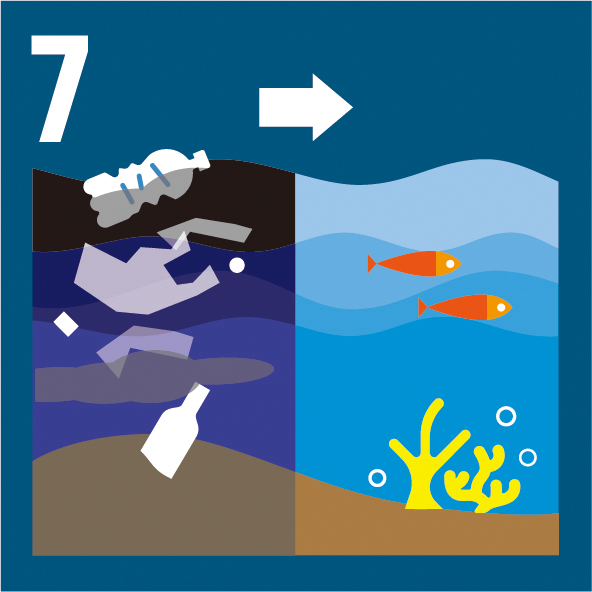
Over the past decades, Hong Kong has made substantial progress in improving water quality by expanding and upgrading sewage collection and treatment facilities, alongside the strict implementation of pollution control measures. In addition, the Government is committed to the regular monitoring of water quality, including levels of microplastics and other harmful substances, and to promoting the safe use of pesticides and herbicides—demonstrating a long-term, holistic vision for safeguarding our aquatic ecosystems. Future plans will move beyond broad pollution control to more targeted interventions, aiming to reduce pollutants and nutrient runoff in critical aquatic habitats.
BSAP 2035 Overall Targets
China NBSAP Priority Actions
KMGBF Targets

SDGs
BSAP 2035 Strategic Area
Priority Action 2.1Connect people to nature and improve awareness of nature’s contributions to people
Hong Kong offers the best of both worlds—urban convenience and easy access to our nature. Hiking trails and country parks are often just minutes away, making biodiversity a visible, everyday experience rather than an abstract idea. Over the years, NGOs, academics, and the Government have partnered closely to broaden opportunities for people to connect with nature. Initiatives include biodiversity festivals and exhibitions, guided tours, and hundreds of education events each year. The term biodiversity has become more familiar to many in Hong Kong. Building on this, we will support more immersive activities that highlight nature’s direct contributions to our quality of life, fostering lasting public commitment to biodiversity conservation.
BSAP 2035 Overall Targets
China NBSAP Priority Actions
KMGBF Targets
SDGs
BSAP 2035 Strategic Area
Priority Action 2.2Encourage responsibility and foster active stewardship of nature
To sustain our natural heritage, biodiversity conservation must be a shared responsibility across society and among all individuals. By integrating nature-friendly initiatives with the One Health approach—which links human, animal, and ecosystem health—we foster a community that values its connection to the natural environment and embraces coexistence with biodiversity. By promoting greater community awareness and encouraging involvement through diverse channels, we aim to cultivate a shared culture of nature appreciation rooted in responsibility and respectful conduct. When sectors, communities, and individuals collectively commit to conservation, we strengthen resilience and ensure the city’s biodiversity and vibrant natural heritage can be safeguarded and passed on to future generations.
BSAP 2035 Overall Targets
China NBSAP Priority Actions
KMGBF Targets
SDGs
BSAP 2035 Strategic Area
Priority Action 2.3Encourage businesses to disclose biodiversity-related risks, dependencies and opportunities
Encouraging enterprises to disclose biodiversity-related risks, dependencies, and opportunities is both an environmental imperative and a responsibility that reflects Hong Kong's role as an international financial centre. Business activities rely not only on global supply chains but also on local ecosystems. Companies may benefit from biodiversity while remaining vulnerable to its degradation.
Hong Kong has shown leadership in advancing climate and sustainability disclosure, launching the Roadmap on Sustainability Disclosure in 2024 to adopt the ISSB Standards by 2028, making it one of the first jurisdictions to align local standards with international standards. Disclosing biodiversity risks and dependencies can drive innovation, support sustainable business practices, and open opportunities in NbS and green technologies.
BSAP 2035 Overall Targets
China NBSAP Priority Actions
KMGBF Targets
SDGs
BSAP 2035 Strategic Area
Priority Action 2.4Increase financial flows from proinnovation funding schemes and diverse financial resources to support nature conservation, green technology and sustainable development
Mobilising resources from all sources to support nature-related initiatives can catalyse cross-disciplinary cooperation, ensuring long-term conservation and strengthening economic resilience. As a leading global financial hub with robust expertise, free capital flows, and strong ties with the Chinese Mainland, Hong Kong is actively channelling diverse capital—from banks, family offices, and institutions—into green/sustainable finance through innovative instruments such as green bonds and tokenisation. These are crucial for mitigating the impacts of climate change, reversing biodiversity loss, and fostering a resilient economy.
Enhanced funding is particularly important for advancing green technologies, driving cross-disciplinary and innovative conservation projects, and incentivising businesses to adopt sustainable practices and disclose their environmental dependencies. Such strategic investment goes beyond individual projects, and embeds biodiversity into Hong Kong's financial system to secure long-term, large-scale resources required for conservation and sustainable development.
BSAP 2035 Overall Targets
China NBSAP Priority Actions
KMGBF Targets
SDGs
BSAP 2035 Strategic Area
Priority Action 2.5Integrate biodiversity and climate resilience considerations into city development policies, standards and decision making
Climate change and biodiversity loss are inseparable crises. Climate impacts drive species extinction and ecosystem degradation, while healthy, biodiverse ecosystems are essential for climate regulation and strengthening resilience. Recognising this intrinsic linkage, integrating biodiversity and climate resilience into Hong Kong's city development policies represents a pivotal initiative in the next phase of the BSAP. Building on earlier successes in mainstreaming biodiversity into planning standards and promoting urban greening initiatives, go further to adopt a more comprehensive strategy that recognises biodiversity conservation and climate adaptation as mutually reinforcing priorities. By tackling both challenges together, we unlock powerful synergies that amplify conservation outcomes and climate resilience.
BSAP 2035 Overall Targets
China NBSAP Priority Actions
KMGBF Targets
SDGs
BSAP 2035 Strategic Area
Priority Action 2.6Encourage broad-based adoption of NbS and wildlife-friendly elements in the city
Widespread adoption of Nature-based Solutions (NbS) and wildlife-friendly designs presents opportunities to address complex societal challenges. Like other global metropolises, Hong Kong faces mounting environmental and social pressures: more extreme weather events, urban heat islands, densely populated neighbourhoods, and biodiversity loss that undermines ecosystem services.
In this background, integrating NbS into major developments is a transformative opportunity to address multiple societal challenges through ecologically intelligent design. In the next phase, we will champion NbS to turn large-scale developments into catalysts of urban regeneration. This approach simultaneously advances biodiversity conservation, climate adaptation, public health, and social equity, creating resilient, liveable neighbourhoods where nature is embedded in everyday living.
BSAP 2035 Overall Targets
China NBSAP Priority Actions
KMGBF Targets
SDGs
BSAP 2035 Strategic Area
Priority Action 2.7Facilitate wider recognition and knowledge sharing of good practices supported by multisource funding
Showcasing the successes and experiences gained from conservation initiatives inspires action and fosters collaboration among diverse stakeholders. Hong Kong has been implementing a range of conservation projects, from habitat conservation to community education, with many more planned for the future. Actively sharing these achievements connects government bodies, private enterprises, academic institutions and community groups, building momentum for broader impact. Leveraging regional and international platforms to promote Hong Kong's conservation achievements is also effective in fostering partnerships that cross sectors and boundaries.
BSAP 2035 Overall Targets
China NBSAP Priority Actions
KMGBF Targets
SDGs
BSAP 2035 Strategic Area
Priority Action 2.8Promote sustainable and modernised agricultural and fisheries practices
Hong Kong's agriculture and fisheries are deeply rooted in local cultural heritage and hold significant historical importance. Although they are modest in scale, these industries contribute to food security, create employment opportunities, and promote ecological stewardship. Beyond their economic functions, they are closely connected to Hong Kong's ecology and serve as essential resources for tourism and environmental education. Recognising that these industries are shared public assets, the Government has been attaching importance to their sustainable development.
In late 2023, the Government promulgated the Blueprint for the Sustainable Development of Agriculture and Fisheries. This blueprint was developed collaboratively with stakeholders from the agriculture and fisheries sectors to create new opportunities, enhance competitiveness, and drive modernisation and sustainable development in these industries. Additionally, it aims to provide the public with safe and high-quality local agricultural and fisheries products. These efforts not only support the growth of local agriculture and fisheries but also help preserve Hong Kong's cultural identity and ecological integrity.
BSAP 2035 Overall Targets
China NBSAP Priority Actions
KMGBF Targets
SDGs
BSAP 2035 Strategic Area
Priority Action 2.9Promote sustainable consumption and waste reduction/recycling
Nurturing a culture of sustainable consumption and raising community awareness about waste reduction and recycling are essential to achieving a circular economy. To tackle the challenge of waste management up to 2035, Hong Kong is committed to advancing the Waste Blueprint for Hong Kong 2035 with a vision of “Waste Reduction • Resources Circulation • Zero Landfill”. The Blueprint sets out a long-term target to move away from the reliance on landfills for direct disposal of municipal solid waste (MSW) by around 2035. The Government’s strategy has two main directions. The first is to mobilise the entire community to practise waste reduction and waste separation for recycling in the upstream to reduce the overall waste disposal amount. The second is to proactively drive the development of downstream waste-to-energy (WtE) facilities for sustainable disposal of the remaining MSW. We will take forward waste reduction and recycling work along four directions – strengthening public education, enhancing recycling network, strengthening collaboration with industries, and utilising market forces to develop environmental infrastructure.
BSAP 2035 Overall Targets
China NBSAP Priority Actions
KMGBF Targets
SDGs
BSAP 2035 Strategic Area
Priority Action 2.10Promote sustainable ecotourism
Hong Kong, renowned for its vibrant urban landscape yet blessed with rich biodiversity, can harness sustainable ecotourism to harmonise conservation with socio-economic development. By offering immersive experiences that highlight local ecosystems and biodiversity, ecotourism deepens public appreciation of nature among both residents and visitors. It also provides communities with new income opportunities while encouraging active participation in conservation. When revenues are reinvested in ecosystem protection and community projects, ecotourism creates a sustainable cycle in which economic gains strengthen environmental health. Through sustainable practices, Hong Kong can set a benchmark for green tourism in the Greater Bay Area, positioning itself as a regional leader in sustainable tourism development.
BSAP 2035 Overall Targets
China NBSAP Priority Actions
KMGBF Targets
SDGs
BSAP 2035 Strategic Area
Priority Action 3.1Improve knowledge on local biodiversity and ecosystems
Persistent efforts to monitor and assess local biodiversity are essential to inform effective conservation measures and ensure the sustainable management of the city’s natural heritage. Systematic monitoring establishes critical baselines and tracks changes over time. While current ecological monitoring of key species and vital habitats provides invaluable data, yet significant gaps remain. Developing a comprehensive List of Threatened Species across major taxonomic groups will help consolidate fragmented knowledge and identify conservation priorities. As we move into the next phase of the BSAP, we will continue ecological monitoring and undertake targeted assessments to evaluate the current state of local biodiversity, laying the groundwork for more effective conservation strategies.
BSAP 2035 Overall Targets
China NBSAP Priority Actions
KMGBF Targets
SDGs
BSAP 2035 Strategic Area
Priority Action 3.2Support research and enhance knowledge transfer and access
In the rapidly evolving landscape of big data, information has become a critical asset for guiding efficient resource management and enabling evidence-based decisions to address our city’s multifaceted environmental challenges. During the first phase of the BSAP, data platforms such as the HKBIH and HKED were established to provide stakeholders and the public with easier access to ecological and environmental data. These platforms consolidate extensive information on local species, habitats, and environmental conditions, thereby deepening public education and supporting environmental assessments.
In the next phase, we will further support research that addresses critical knowledge gaps through relevant funding schemes such as CCFS, LCF and ECF, and enhance channels for knowledge transfer and access. We will also encourage interdisciplinary capacity-building activities, such as organising the annual National Ecology Day events, and supporting professional institutions to hold forums on urban-rural symbiosis.
BSAP 2035 Overall Targets
China NBSAP Priority Actions
KMGBF Targets
SDGs
BSAP 2035 Strategic Area
Priority Action 3.3Establish and upgrade biodiversity infrastructure and institutions
Supported by the dedicated efforts of numerous organisations, scientists, and nature enthusiasts committed to studying local biodiversity, Hong Kong has a long history of conserving and researching its natural heritage, underscoring the importance of establishing central repositories and supporting existing biodiversity facilities. The first phase of the BSAP established the HKBIH as a key data repository. In the next phase, we may explore the feasibility of establishing facilities to house specimens and include professional curation to ensure the scientific integrity and accessibility of these resources. By integrating digital and physical infrastructure, Hong Kong can develop a comprehensive approach to biodiversity conservation and education. These efforts are essential to effectively showcase our biodiversity, promote research and innovation, engage the public, and facilitate environmental education.
BSAP 2035 Overall Targets
China NBSAP Priority Actions
KMGBF Targets
SDGs
BSAP 2035 Strategic Area
Priority Action 3.4Nurture next-generation talents in nature conservation
To secure the long-term sustainability of Hong Kong’s biodiversity, we are prioritising the development of a professional workforce, moving beyond general education to create a pipeline of skilled practitioners in the field. The first phase of the BSAP successfully raised public awareness and integrated biodiversity into school curricula. Still, it also revealed a gap in developing a holistic, innovative workforce capable of effectively tackling these complex issues.
To address this gap, we will develop training programmes and educational pathways that strengthen students’ scientific thinking and equip them with practical skills in ecological research, habitat restoration, environmental policy, green finance, and community engagement. Such training and knowledge acquisition will nurture a passion for nature, foster environmental ethics, and instil a stronger sense of stewardship—qualities essential for future conservation efforts.
BSAP 2035 Overall Targets
China NBSAP Priority Actions
KMGBF Targets
SDGs
BSAP 2035 Strategic Area
Priority Action 3.5Support conservation, monitoring, education and enforcement through technologies and tools
Advanced technologies offer substantial potential to strengthen environmental and ecological monitoring capabilities and enhance the detection of illegal wildlife crimes. The Government has made significant strides in deploying advanced technologies to support conservation efforts, enhance monitoring capabilities, provide educational resources and strengthen enforcement against environmental violations. We will explore further opportunities to integrate innovative technologies into biodiversity conservation management. Examples of such technologies are the Internet of Things (IoT) sensors, for example, can play a transformative role in collecting continuous data across various habitats, providing insights into wildlife patterns, ecosystem health and the impacts of climate change, and the use of artificial intelligence (AI)-driven analytics for conservation data processing.
BSAP 2035 Overall Targets
China NBSAP Priority Actions
KMGBF Targets
SDGs
BSAP 2035 Strategic Area
Priority Action 3.6Adopt modern technologies and tools to foster sustainable agricultural and aquaculture industries
Advanced modern technologies and tools will support the sustainable growth of Hong Kong's agricultural and aquaculture sectors, fostering high-quality development and transforming traditional industries through innovation and enhanced resource management. The Blueprint for the Sustainable Development of Agriculture and Fisheries underscores the Government's commitment to advancing the sustainable growth of both sectors through modern technologies and practices. This includes actively assisting the industries in adopting the use of smart farming technologies, advanced aquaculture systems, and low-carbon production models, as well as strengthening research and capacity building to support sustainable resource management. The aim is to drive these industries towards high-quality development, generate new business opportunities, and promote the upgrading and transformation of traditional industries.
BSAP 2035 Overall Targets
China NBSAP Priority Actions
KMGBF Targets
SDGs
BSAP 2035 Strategic Area
Priority Action 4.1Strengthen joint effort to conserve wetlands as networks, and support endangered migratory species
Strengthening regional collaboration is critical for developing both marine and terrestrial transboundary ecological corridors that facilitate the conservation of migratory species. Enhanced collaboration in managing migratory stopover sites along key routes will also provide critical support to them during their journeys. Prominent examples include Wutong Mountain (Shenzhen) - Robin's Nest (Hong Kong) Ecological Corridor, and the Guangdong-Hong Kong Chinese White Dolphin Conservation Co-operation Platform. By further collaborating with regions beyond its borders, Hong Kong can play a pivotal role in identifying and safeguarding the ecological functions of connected or stopover habitats, and in supporting the conservation of migratory species in the region.
BSAP 2035 Overall Targets
China NBSAP Priority Actions
KMGBF Targets
SDGs
BSAP 2035 Strategic Area
Priority Action 4.2Step up cooperation to combat wildlife crime
Wildlife crime is a complex, persistent, and transnational challenge. It is often perpetrated by sophisticated syndicates that exploit enforcement gaps, posing significant threats to endangered species and ecosystems. To effectively combat wildlife crime, a complex and borderless challenge that threatens endangered species and ecosystems, it is essential for Hong Kong to enhance cross-boundary cooperation with neighbouring cities through collaborative law enforcement, intelligence sharing and coordinated operations. By fostering stronger cross-border cooperation, Hong Kong can significantly enhance its effectiveness in combating wildlife crime and mitigate its contribution to this devastating illegal trade.
BSAP 2035 Overall Targets
China NBSAP Priority Actions
KMGBF Targets
SDGs
BSAP 2035 Strategic Area
Priority Action 4.3Take forward bilateral and multilateral cooperation to deepen exchange of experience and collaboration
Regional and international collaborations are essential for learning from global best practices to overcome hurdles to local conservation challenges, thereby improving one's sustainable efforts and contributing to collective solutions. Challenges such as climate change, biodiversity loss and transboundary pollution require concerted regional and international efforts. Engaging in bilateral partnerships with other cities or regions and participating in multilateral forums allows Hong Kong to learn from best practices, share its own expertise, and collectively develop innovative solutions. Such cooperation facilitates the transfer of knowledge and technology, strengthens policy frameworks, and builds collective efforts against common environmental threats, ultimately enhancing Hong Kong's capacity to achieve its sustainability goals and contribute to global environmental governance.
BSAP 2035 Overall Targets
China NBSAP Priority Actions
KMGBF Targets
SDGs
BSAP 2035 Strategic Area
Priority Action 4.4Participate in international organisations / platforms to facilitate exchange
As a global city with significant ecological assets and challenges, Hong Kong is uniquely positioned to serve as a vital connector between the Chinese Mainland and the international community. Engaging with global partners allows Hong Kong to share best practices and learn from diverse expertise. Examples of knowledge exchange opportunities include the regular meetings of the Conference of the Parties of CBD, CITES, Convention on Wetlands. The Government also supports academic experts in attending international workshops from time to time. Such engagement enables access to cutting-edge research, fosters collaboration on transboundary issues such as migratory species protection, and helps bridge different approaches to environmental governance. This key positioning allows Hong Kong to align its own conservation strategies with national targets and facilitate the flow of knowledge, capital, and technology between the Chinese Mainland and the world.
BSAP 2035 Overall Targets
China NBSAP Priority Actions
KMGBF Targets
SDGs
BSAP 2035 Strategic Area
Priority Action 4.5Support cross-border awareness building activities and youth training programmes
Cross-border awareness-building activities and youth training programs, particularly among GBA cities, can foster regional cooperation in environmental stewardship. These initiatives offer citizens, in particular young people, valuable opportunities to learn about conservation in practice, and deepen their understanding of national priorities in nature conservation and sustainable development; at the same time, they promote cultural understanding and diverse perspectives that would inspire collaboration. By engaging youth from various cities in addressing shared environmental challenges, these programmes help cultivate a sense of collective responsibility and empower the next generation to take proactive roles in protecting biodiversity and building a beautiful GBA.
BSAP 2035 Overall Targets
China NBSAP Priority Actions
KMGBF Targets
SDGs